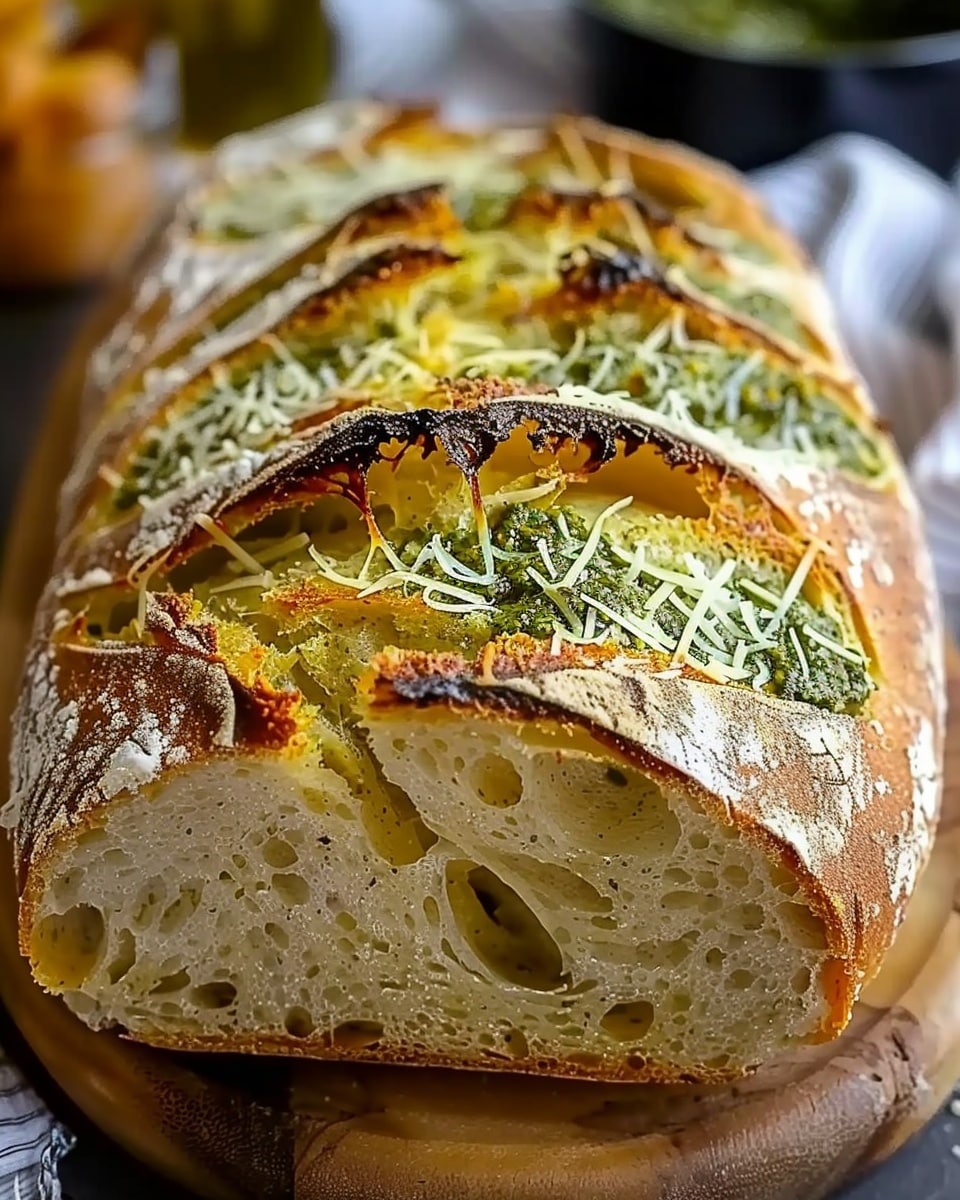
This pesto parmesan sourdough is one of my favorite ways to add bold, savory flavor to a classic loaf. I love how the tangy sourdough crumb blends with herbaceous pesto and nutty Parmesan. The crust bakes up beautifully crisp while the inside stays soft and aromatic, making every slice feel special yet approachable.
Why You’ll Love This Recipe
I love this recipe because it turns traditional sourdough into something exciting without adding complicated steps. The pesto and Parmesan are folded right into the dough, so the flavor runs through the entire loaf instead of sitting on the surface. I also appreciate how versatile this bread is, whether I’m slicing it for sandwiches, serving it with soup, or enjoying it toasted on its own. It’s impressive enough for guests and simple enough for everyday baking.
Ingredients
(Tip: You’ll find the full list of Ingredients and measurements in the recipe card below.)
500 g bread flour (about 4 cups)
100 g active sourdough starter (about 1/2 cup)
350 g filtered water (about 1 1/2 cups)
10 g fine sea salt (about 2 teaspoons)
80 g pesto, homemade or high-quality store-bought
50 g freshly grated Parmesan cheese (about 1/2 cup, packed)
Optional topping:
extra grated Parmesan
olive oil for drizzling
Directions
I begin by mixing the sourdough starter and water in a large bowl until mostly combined. I add the bread flour and mix until there are no dry bits left, then let the dough rest for 30 minutes.
After the rest, I sprinkle the salt over the dough and work it in using my hands until fully incorporated. I cover the bowl and let the dough ferment at room temperature for 4 to 5 hours, performing stretch-and-folds every 30 to 45 minutes.
During the final fold, I gently stretch the dough out, spread the pesto and grated Parmesan evenly across the surface, and fold the dough back onto itself carefully to keep its structure.
Once bulk fermentation is complete, I shape the dough into a round or oval loaf and place it seam-side up in a floured banneton or towel-lined bowl. I let it rest at room temperature for about 1 hour, then refrigerate it overnight for 8 to 12 hours.
When ready to bake, I preheat the oven to 475°F (245°C) with a Dutch oven inside. I flip the dough onto parchment paper, score the top, and transfer it to the hot Dutch oven. I bake it covered for 20 minutes, then uncovered for another 20 to 25 minutes until the crust is deeply golden. I always let the loaf cool completely before slicing.
Servings And Timing
This recipe makes one artisan loaf, which I usually cut into 10 to 12 slices.
Active preparation takes about 25 minutes, while total fermentation and proofing time is mostly hands-off. Baking takes approximately 45 minutes, plus cooling time.
Variations
I enjoy customizing this loaf depending on what I have available. Sometimes I add chopped sun-dried tomatoes for extra depth, or I swap Parmesan for mozzarella or fontina for a softer, creamier texture. Roasted garlic is another favorite addition, and occasionally I sprinkle seeds on top before baking for added crunch.
Storage/Reheating
I store the cooled loaf wrapped in a clean kitchen towel or paper bag at room temperature, where it stays fresh for up to 4 days. For longer storage, I slice the bread and freeze it. I reheat slices directly from frozen in the toaster or warm the loaf briefly in the oven to refresh the crust.
FAQs
Can I use all-purpose flour instead of bread flour?
I can use all-purpose flour, but I find the loaf is slightly less chewy and structured than when I use bread flour.
Is this recipe beginner-friendly?
I think it works best if I’ve already baked a basic sourdough loaf, but the steps are still straightforward and manageable.
Can I use store-bought pesto?
I often do, and I just choose one that’s thick and not overly oily so it doesn’t affect the dough texture.
Can I double the recipe?
I can double the ingredients, but I prefer shaping and baking each loaf separately for the best rise and crust.
What type of sourdough starter should I use?
I always use a 100% hydration starter made with equal parts flour and water.
Conclusion
This pesto parmesan sourdough is a flavorful twist on classic sourdough that I never get tired of baking. I love how simple ingredients come together to create a loaf that feels rustic, aromatic, and deeply satisfying. Whether I serve it with meals or enjoy it on its own, this bread always delivers rich flavor and a beautiful texture.
This pesto parmesan sourdough combines tangy sourdough with herbaceous pesto and nutty Parmesan cheese, resulting in a rustic artisan loaf that’s both flavorful and aromatic. It’s perfect for sandwiches, soups, or simply toasted with butter.
Total Time:18 hours (including fermentation and proofing)
Yield:1 loaf (10–12 slices)
Ingredients
500 g bread flour (about 4 cups)
100 g active sourdough starter (about 1/2 cup)
350 g filtered water (about 1 1/2 cups)
10 g fine sea salt (about 2 teaspoons)
80 g pesto, homemade or high-quality store-bought
50 g freshly grated Parmesan cheese (about 1/2 cup, packed)
Optional: extra grated Parmesan for topping
Optional: olive oil for drizzling
Instructions
In a large bowl, mix sourdough starter and water until mostly combined.
Add bread flour and mix until no dry bits remain. Let the dough rest for 30 minutes (autolyse).
Sprinkle salt over the dough and knead it in until fully incorporated.
Cover and let ferment at room temperature for 4–5 hours, performing stretch-and-folds every 30–45 minutes.
During the final fold, gently stretch out the dough and spread pesto and Parmesan evenly. Fold the dough back onto itself.
Shape the dough into a round or oval loaf and place it seam-side up in a floured banneton or towel-lined bowl.
Let rest for 1 hour at room temperature, then refrigerate overnight for 8–12 hours.
Preheat oven to 475°F (245°C) with a Dutch oven inside. Flip the dough onto parchment paper, score the top, and transfer it into the hot Dutch oven.
Bake covered for 20 minutes, then uncovered for 20–25 minutes until the crust is golden and crisp.
Let cool completely before slicing.
Notes
Use thick pesto to avoid adding too much oil to the dough.
Let the loaf cool fully before slicing to preserve crumb texture.
Roasted garlic or sun-dried tomatoes make great add-ins for deeper flavor.
Swap Parmesan with mozzarella or fontina for a different texture.
Sprinkle seeds on top before baking for added crunch.