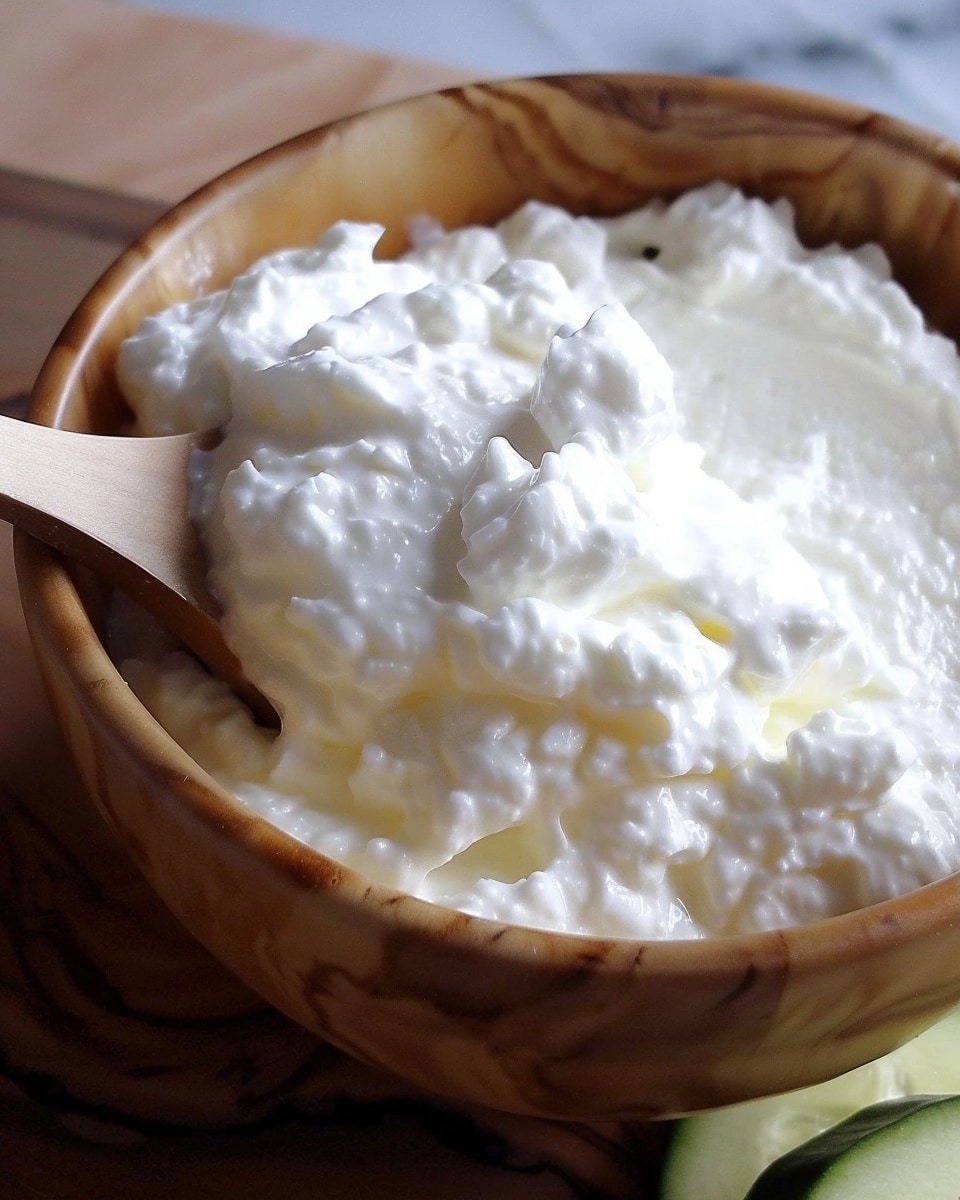
Quark is a German staple I grew up using in both sweet and savory dishes, and I still rely on it for baking, spreads, and simple meals. Since I can’t easily buy quark where I live, I make it at home, and I honestly love how simple and inexpensive the process is. The result is a mild, creamy fresh cheese that works beautifully on its own or as an ingredient in traditional German recipes.
Why You’ll Love This Recipe
I love this recipe because it uses just one ingredient and a bit of patience. I don’t need any special cultures, and the flavor always turns out mild, creamy, and slightly tangy. I also enjoy how flexible it is, since I can drain it longer for a thick, spreadable quark or keep it creamier for spooning over fruit or using in baking. It’s naturally gluten-free, economical, and incredibly versatile in my kitchen.
Ingredients
(Tip: You’ll find the full list of Ingredients and measurements in the recipe card below.)
1 quart buttermilk with live cultures
Directions
I start by choosing one of two easy methods, depending on what equipment I feel like using.
For the yogurt maker method, I pour the buttermilk into the container, cover it, and let it incubate for about 12 hours. Once it has thickened, I transfer it to a sieve set over a bowl and let it drain in the refrigerator for around 6 hours, until it reaches the consistency I like. Then I store it in a covered container in the fridge.
For the oven method, I gently warm the oven to its lowest setting, turn it off, and leave only the oven light on. I pour the buttermilk into a covered casserole dish, wrap it in a thick towel, and place it in the warm oven for 6 to 8 hours. After that, I strain it through a clean kitchen towel or cheesecloth in the refrigerator for about 6 hours, then store it chilled.
Servings And Timing
This recipe makes about 1¾ to 2 cups of quark.
Prep time is about 5 minutes.
Incubation time ranges from 6 to 12 hours, depending on the method.
Drain time is about 6 hours.
Total time is roughly 18 hours.
Variations
I sometimes drain the quark for a shorter time when I want a softer, yogurt-like texture. For a thicker, spreadable version, I simply let it drain longer. I also enjoy mixing in chopped fresh herbs, a bit of salt, or honey and fruit, depending on whether I’m going savory or sweet.
Storage/Reheating
I store homemade quark in an airtight container in the refrigerator. I always use it within a few days for the best flavor and texture. Since this is a fresh cheese, I never reheat it directly, but I often bake with it or stir it into warm dishes without any issues.
FAQs
Can I Make Quark Without Live Cultures?
I’ve learned that live cultures are essential. Without them, the buttermilk won’t properly thicken or develop the right flavor.
How Thick Should Quark Be?
I decide this based on how long I drain it. Less draining gives me a creamy texture, while longer draining makes it thicker and more spreadable.
Is Quark The Same As Cottage Cheese?
I don’t consider them the same. Quark is smoother, milder, and creamier, without the curds found in cottage cheese.
Can I Use Homemade Quark For Baking?
I use it all the time in baking, especially for German-style cheesecakes. It gives baked goods a soft, creamy texture.
Can I Substitute Quark If I Don’t Have Time To Make It?
When I’m in a hurry, I use Greek yogurt as a substitute, knowing the flavor will be a bit tangier and the texture slightly different.
Conclusion
Making quark at home is one of those simple kitchen skills I truly enjoy. With just buttermilk and time, I get a versatile fresh cheese that reminds me of traditional German cooking and works in countless recipes. Once I started making it myself, it became a regular part of my kitchen routine, and I always try to keep some on hand.
Homemade quark is a creamy, mild fresh cheese made with just buttermilk and time. Perfect for both sweet and savory dishes, this versatile German staple is easy, economical, and a delicious addition to your kitchen routine.
Total Time:18 hours
Yield:1¾ to 2 cups
Ingredients
1 quart buttermilk with live cultures
Instructions
Yogurt Maker Method: Pour the buttermilk into the yogurt maker container and cover. Incubate for about 12 hours until thickened. Transfer to a sieve set over a bowl and drain in the refrigerator for about 6 hours or until it reaches your desired consistency.
Oven Method: Warm the oven slightly, then turn it off and leave only the oven light on. Pour the buttermilk into a covered casserole dish, wrap it in a towel, and place it in the oven for 6–8 hours. Strain through a clean towel or cheesecloth in the refrigerator for about 6 hours until desired thickness is achieved.
Transfer the finished quark to an airtight container and refrigerate. Use within a few days.
Notes
Use buttermilk with live cultures—this is essential for proper fermentation.
Drain longer for a thicker, spreadable quark or less for a creamy, spoonable version.
Flavor with herbs for savory dishes or honey and fruit for sweet spreads.
Great for baking—especially German-style cheesecakes.
Substitute with Greek yogurt in a pinch, but note the difference in texture and flavor.