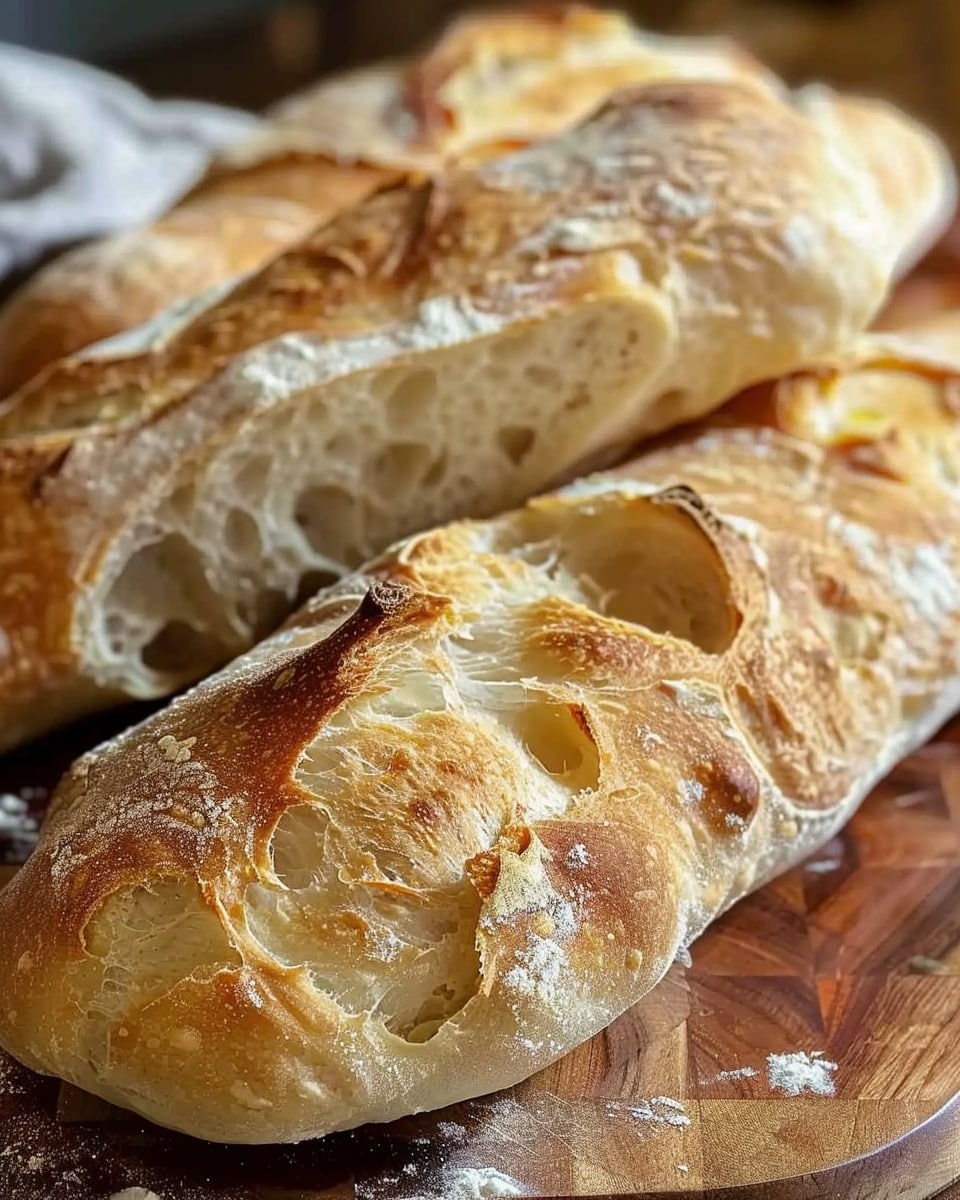
Ciabatta is a classic Italian bread celebrated for its crisp golden crust, airy open crumb, and delicate olive oil flavor. This rustic loaf is perfect for sandwiches, bruschetta, dipping in olive oil, or soaking up rich sauces. With a simple ingredient list and traditional technique, you can recreate authentic bakery-style ciabatta right in your own kitchen.
Why You’ll Love This Recipe
This ciabatta recipe delivers a beautifully chewy interior with large air pockets and a crisp crust. The dough is high in hydration, which creates the signature light texture. It requires minimal shaping, making it approachable even for home bakers. The flavor develops through slow fermentation, giving the bread a subtle tang and rich depth. Whether served fresh, toasted, or used for sandwiches, it is incredibly versatile.
Ingredients
(Tip: You’ll find the full list of ingredients and measurements in the recipe card below.)
For the poolish (starter):
1 cup (120 g) bread flour
1/2 cup (120 ml) warm water
1/4 teaspoon active dry yeast
For the dough:
3 cups (360 g) bread flour
1 1/4 cups (300 ml) warm water
2 tablespoons olive oil
1 1/2 teaspoons salt
1/2 teaspoon active dry yeast
Directions
Prepare the poolish: In a medium bowl, combine 1 cup bread flour, 1/2 cup warm water, and 1/4 teaspoon yeast. Stir until smooth. Cover with plastic wrap and let it sit at room temperature for 8 to 12 hours until bubbly and doubled in size.
Mix the dough: In a large mixing bowl, combine the prepared poolish, 1 1/4 cups warm water, and 1/2 teaspoon yeast. Stir gently to dissolve. Add 3 cups bread flour and mix until a sticky dough forms.
Add salt and olive oil: Mix in 1 1/2 teaspoons salt and 2 tablespoons olive oil. Knead using a stand mixer with a dough hook for 8 to 10 minutes, or perform stretch-and-folds by hand every 30 minutes over 2 hours. The dough will remain sticky and elastic.
First rise: Cover the bowl and let the dough rise at room temperature for about 1 1/2 to 2 hours, until doubled in size.
Shape the loaves: Generously flour a work surface. Gently turn the dough out without deflating too much. Divide into two rectangular pieces. Carefully stretch each piece slightly into a rough rectangle. Avoid overhandling.
Second rise: Place the shaped dough onto a floured baking sheet or parchment paper. Cover loosely and let rise for 45 to 60 minutes.
Preheat the oven: Preheat your oven to 425°F (220°C). Place a shallow pan on the lower rack to create steam.
Bake: Transfer the dough to the oven. Pour 1 cup of hot water into the shallow pan to create steam. Bake for 20 to 25 minutes until golden brown and the loaves sound hollow when tapped.
Cool: Remove from the oven and allow the bread to cool completely on a wire rack before slicing.
Servings and timing
Servings: 2 medium loaves (approximately 8 servings total)
Preparation time: 20 minutes active preparation
Poolish fermentation: 8 to 12 hours
First rise: 1 1/2 to 2 hours
Second rise: 45 to 60 minutes
Baking time: 20 to 25 minutes
Total time: Approximately 11 to 15 hours (including fermentation)
Variations
You can enhance ciabatta by adding fresh rosemary and flaky sea salt before baking for a fragrant twist. Incorporate sun-dried tomatoes and olives for a Mediterranean flavor. For whole wheat ciabatta, replace 1 cup of bread flour with whole wheat flour and slightly increase the water by 1 to 2 tablespoons. You can also sprinkle semolina flour on the baking surface for extra texture.
Storage/Reheating
Store ciabatta at room temperature in a paper bag or wrapped loosely in a clean kitchen towel for up to 2 days. Avoid sealing in plastic, as it softens the crust.
For longer storage, freeze the cooled loaf in an airtight bag for up to 2 months. To reheat, place frozen bread directly in a 350°F (175°C) oven for 10 to 15 minutes. For day-old bread, sprinkle lightly with water and warm in the oven for 5 to 8 minutes to refresh the crust.
FAQs
Why is my ciabatta dough so sticky?
Ciabatta is a high-hydration dough, which gives it its airy structure. Sticky dough is normal and essential for creating large air pockets.
Can I use all-purpose flour instead of bread flour?
Yes, but bread flour is recommended for better gluten development and chewiness. All-purpose flour may result in a slightly softer texture.
How do I get large air holes in my ciabatta?
Avoid overhandling the dough and maintain proper hydration. Gentle shaping preserves the air bubbles formed during fermentation.
Do I really need to make a poolish?
The poolish enhances flavor and texture. While you can skip it, the bread will not have the same depth of flavor.
How do I know when ciabatta is fully baked?
The crust should be deep golden brown, and the loaf should sound hollow when tapped on the bottom.
Can I make the dough ahead of time?
Yes, you can refrigerate the dough after the first rise for up to 24 hours to develop more flavor.
Why didn’t my bread rise properly?
Possible causes include inactive yeast, water that was too hot, or insufficient rising time.
Can I bake ciabatta without steam?
Steam helps create a crisp crust. Without steam, the crust may be softer and less crisp.
How should I slice ciabatta?
Use a serrated bread knife and slice gently to avoid compressing the airy crumb.
Is ciabatta good for sandwiches?
Yes, its sturdy crust and airy interior make it ideal for panini, grilled sandwiches, and hearty fillings.
Conclusion
Homemade ciabatta bread brings authentic Italian flavor to your table with its crisp crust and light, airy interior. Though the process takes time, the result is a rustic loaf full of character and depth. Perfect for sandwiches, appetizers, or simply dipped in olive oil, this traditional bread is a rewarding and versatile addition to your baking repertoire.
Ciabatta is a classic Italian bread known for its crisp golden crust, airy open crumb, and delicate olive oil flavor. This rustic loaf features a high-hydration dough and slow fermentation, creating bakery-style bread perfect for sandwiches, dipping, or serving alongside hearty meals.
Total Time:12 hours
Yield:2 loaves (8 servings)
Ingredients
For the poolish (starter):
1 cup (120 g) bread flour
1/2 cup (120 ml) warm water
1/4 teaspoon active dry yeast
For the dough:
3 cups (360 g) bread flour
1 1/4 cups (300 ml) warm water
2 tablespoons olive oil
1 1/2 teaspoons salt
1/2 teaspoon active dry yeast
Instructions
In a medium bowl, mix 1 cup bread flour, 1/2 cup warm water, and 1/4 teaspoon yeast until smooth. Cover and let sit at room temperature for 8–12 hours until bubbly and doubled.
In a large bowl, combine the poolish, 1 1/4 cups warm water, and 1/2 teaspoon yeast. Stir gently.
Add 3 cups bread flour and mix until a sticky dough forms.
Mix in salt and olive oil. Knead with a stand mixer for 8–10 minutes, or perform stretch-and-folds every 30 minutes over 2 hours. Dough will remain sticky.
Cover and let rise 1 1/2–2 hours until doubled.
Turn dough onto a well-floured surface. Divide into two rectangles and gently shape without deflating.
Transfer to a floured baking sheet or parchment. Cover and let rise 45–60 minutes.
Preheat oven to 425°F (220°C) and place a shallow pan on the lower rack.
Place loaves in oven and carefully pour 1 cup hot water into the pan to create steam. Bake 20–25 minutes until golden brown and hollow-sounding.
Cool completely on a wire rack before slicing.
Notes
Sticky dough is normal and essential for an open crumb.
Avoid overhandling to preserve air pockets.
Steam is important for developing a crisp crust.
Store at room temperature up to 2 days in a paper bag or towel.
Freeze up to 2 months and reheat at 350°F (175°C) for 10–15 minutes.