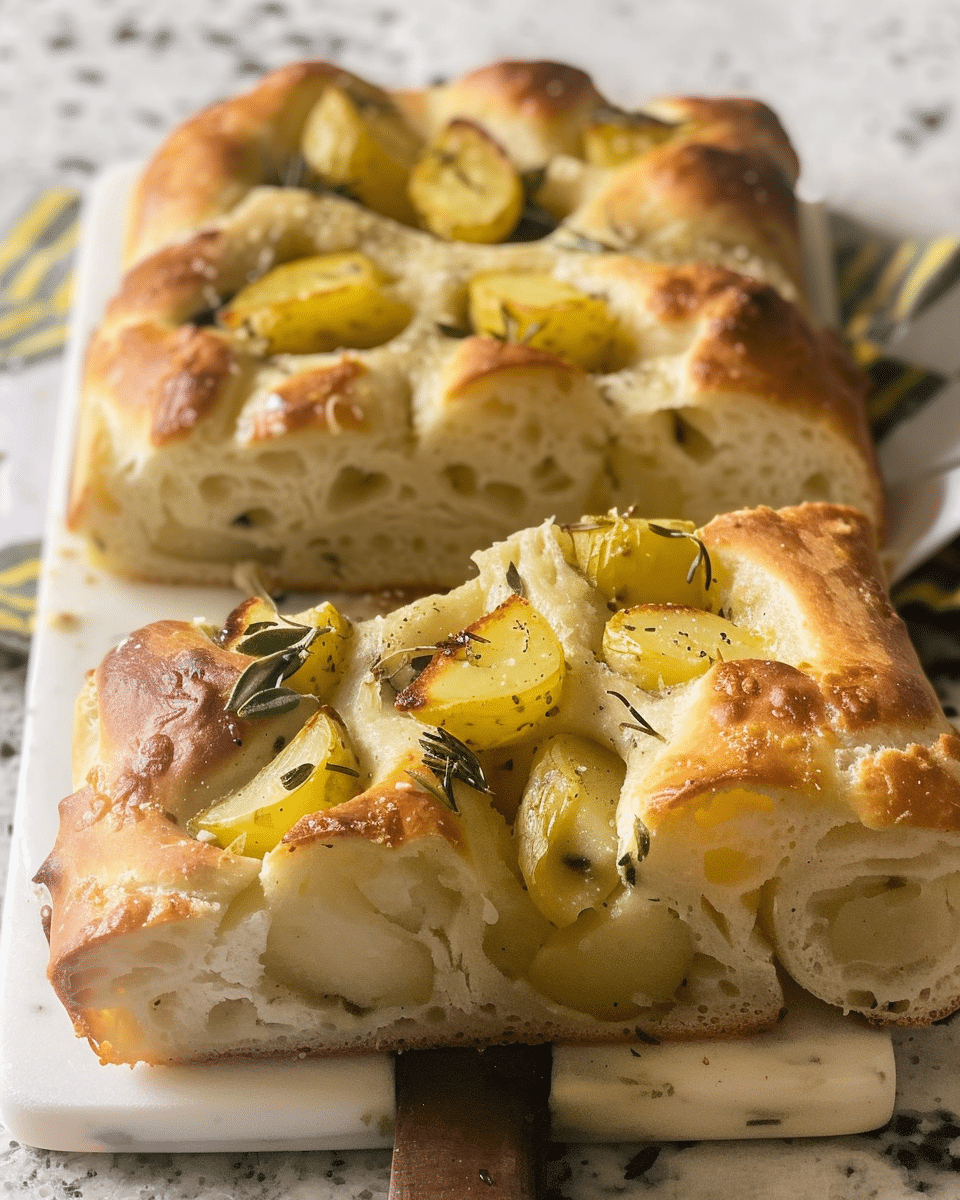
This potato focaccia is soft, chewy, and filled with incredible flavor thanks to golden olive oil, creamy Yukon Gold potatoes, fragrant herbs, and a hint of lemon zest. It’s the kind of bread I make when I want something satisfying and a little special, whether for a dinner party or just to enjoy on a cozy afternoon.
Why I’ll Love This Recipe
I love this recipe because it’s as versatile as it is delicious. I can make it all in one day or prep it the night before, and the dough doesn’t require a stand mixer. The combination of creamy diced potatoes, bright lemon zest, and chopped herbs creates a focaccia that’s more than just bread—it’s a whole experience. I also appreciate the option to use different pans depending on how thick I want the slices.
Ingredients
(Here’s a tip: Check out the full list of ingredients and measurements in the recipe card below.)
For the dough:
2 cups (448 g) warm water (100–110°F / 38–43°C)
1 ½ tablespoons (32 g) honey
1 tablespoon (9 g) active dry yeast
4 cups (540 g) bread flour or all-purpose flour
2 tablespoons (28 g) extra-virgin olive oil
1 tablespoon (18 g) sea salt
For the pan:
1 tablespoon extra-virgin olive oil
For the topping:
9 ounces (257 g) Yukon Gold potatoes, small diced and cooked
18–20 Castelvetrano olives (optional)
3 tablespoons fresh herbs (like rosemary, sage, or parsley), chopped
Zest and juice of 1 lemon
2 tablespoons (28 g) extra-virgin olive oil
Sea salt flakes, to taste
Directions
Line an 18×13-inch rimmed baking sheet with parchment paper, letting the sides hang over the edges, and press it into the corners. Set aside.
In a large mixing bowl, stir together warm water, yeast, and honey. Let it sit for about 10 minutes until it becomes foamy.
Add the flour and olive oil to the bowl, stirring until the dough comes together. Cover with a damp kitchen towel and let it rest for 20 minutes.
After resting, add the salt and mix it into the dough. The dough will be sticky—this is normal.
First rise (2 hours):
During the first hour, do a “stretch and fold” every 15 minutes (4 times total). With oiled hands, lift and stretch one side of the dough, fold it over, turn the bowl, and repeat.
In the second hour, cover the dough and let it rest undisturbed until it doubles in size and bubbles appear.
Second rise (2 hours):
Pour 1 tablespoon of olive oil into the prepared pan. Scrape the dough into the pan, drizzle another tablespoon of olive oil on top, and gently rub it across the surface.
Over the next hour, gently stretch and nudge the dough toward the edges of the pan without deflating it.
After that, scatter the cooked potatoes and optional olives on top, pressing them gently into the dough. Let the dough rise for another hour while preheating the oven to 450°F (232°C).
Sprinkle chopped herbs and lemon zest across the dough. Drizzle with 2 tablespoons of olive oil and a generous pinch of sea salt flakes.
Bake for about 25 minutes or until the top is golden brown, bubbling, and has slightly darkened bubbles.
Once baked, remove the focaccia by lifting it out with the parchment paper. Let it cool for about 5 minutes on a wire rack, then move it to a cutting board and slice with a bread knife.
Servings and timing
This recipe makes about 12 slices.
Prep time: 40 minutes
Rise time: 4 hours
Bake time: 25 minutes
Total time: Approximately 5 hours and 5 minutes
Variations
I like swapping in different herbs depending on what I have—sage and parsley are great alternatives to rosemary.
Sometimes I skip the olives for a cleaner flavor, or I switch them out for another variety like Kalamata.
For a thicker, more sandwich-friendly focaccia, I use a 9×13-inch baking dish instead of a sheet pan and extend the bake time to about 30–35 minutes.
I also love the overnight method—after the first hour of folding, I refrigerate the dough overnight and continue the next day with the second rise and baking.
Storage/reheating
I store leftover focaccia in an airtight container in the fridge. It stays soft and flavorful even the next day. To reheat, I preheat the oven to 350°F (177°C), cover any cut edges with foil, lightly spritz the surface with water, and warm it on a baking sheet for about 5 minutes.
FAQs
How do I know if the yeast is active?
I mix it with warm water and honey, then let it sit for 10 minutes. If it foams and smells yeasty, I know it’s good to go. If it stays flat, I toss it and start again with fresh yeast.
Can I use all-purpose flour instead of bread flour?
Yes, both types work well. I’ve used all-purpose when I was out of bread flour and the focaccia still turned out great.
Do I need to peel the potatoes?
I don’t peel them—I just wash them well. The skin adds a bit of texture and flavor that I really like.
Can I make the dough ahead of time?
Yes. I often prep the dough the night before, refrigerate it after the first set of folds, and continue with the rest of the steps the next day.
Is it good for sandwiches?
Absolutely. If I want sandwich slices, I bake it in a smaller pan to get a thicker result. It holds fillings really well without falling apart.
Conclusion
This herby, lemony potato focaccia is a joy to bake and even better to eat. I love how the flavors layer together—the softness of the dough, the richness of the potatoes, the brightness from the lemon, and the savory pop of herbs and olives. Whether I serve it with soup, salad, or turn it into a sandwich, it always hits the spot.
This Herby Lemony Potato Focaccia is a vibrant, flavorful take on the classic Italian bread, featuring fluffy dough infused with olive oil, topped with creamy diced potatoes, fresh herbs, and a burst of lemon zest. Perfect as a side, snack, or sandwich base.
Total Time:5 hours 5 minutes
Yield:12 slices
Ingredients
For the dough:
2 cups (448 g) warm water (100–110°F / 38–43°C)
1 ½ tablespoons (32 g) honey
1 tablespoon (9 g) active dry yeast
4 cups (540 g) bread flour or all-purpose flour
2 tablespoons (28 g) extra-virgin olive oil
1 tablespoon (18 g) sea salt
For the pan:
1 tablespoon extra-virgin olive oil
For the topping:
9 ounces (257 g) Yukon Gold potatoes, small diced and cooked
18–20 Castelvetrano olives (optional)
3 tablespoons fresh herbs (rosemary, sage, or parsley), chopped
Zest and juice of 1 lemon
2 tablespoons (28 g) extra-virgin olive oil
Sea salt flakes, to taste
Instructions
Line an 18×13-inch rimmed baking sheet with parchment paper, letting sides overhang. Set aside.
In a large bowl, mix warm water, honey, and yeast. Let sit 10 minutes until foamy.
Add flour and olive oil, stir until dough forms. Cover and rest for 20 minutes.
Add salt and mix in. Dough will be sticky.
First rise (2 hours): Do 4 stretch and folds every 15 minutes for the first hour. Cover and let rest for another hour until bubbly and doubled.
Second rise (2 hours): Oil the prepared pan, scrape dough in, drizzle more oil on top. Stretch dough to edges over an hour. Add potatoes and olives, press gently, and rise another hour. Preheat oven to 450°F (232°C).
Top with chopped herbs, lemon zest, and drizzle with olive oil and sea salt flakes.
Bake for about 25 minutes or until golden brown with dark bubbles.
Remove with parchment, cool 5 minutes on a rack, then slice and serve.
Notes
Use a smaller pan for thicker focaccia, ideal for sandwiches.
Swap herbs based on availability or taste—sage and parsley are great.
Omit olives or try another variety like Kalamata.
Try the overnight method: refrigerate dough after first folds and continue the next day.
Reheat leftovers at 350°F (177°C) with a spritz of water for best texture.