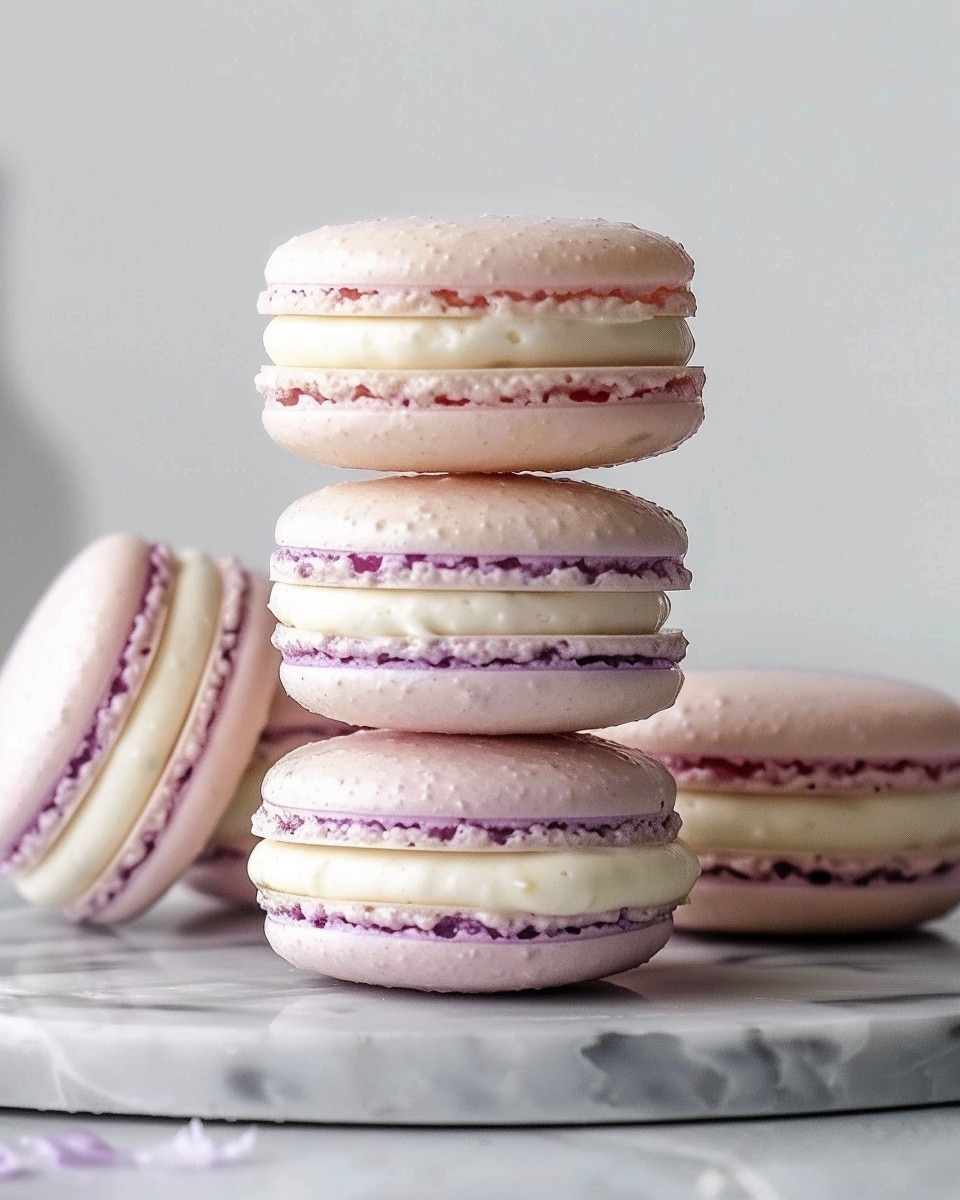
I love making macarons because they feel elegant, technical, and incredibly satisfying once finished. These French macarons come out crisp on the outside, soft and chewy in the center, and beautifully smooth on top with delicate feet. I use the French method because it teaches proper technique and produces consistent results when I take my time and follow each step carefully. This recipe is my go-to when I want reliable macarons with endless flavor and color possibilities.
Why You’ll Love This Recipe
I like this recipe because it’s precise and forgiving when handled correctly. I rely on weighed ingredients, which helps me get consistent shells every time. I also enjoy how adaptable it is, since I can change colors, fillings, and flavors without altering the base method. The texture improves after resting, and the finished macarons always feel bakery-quality and special.
Ingredients
(Tip: You’ll find the full list of Ingredients and measurements in the recipe card below.)
150 grams super-fine almond flour, sifted and measured after sifting
180 grams powdered sugar
¼ teaspoon salt
120 grams egg whites, at room temperature (about 4 large egg whites)
60 grams granulated sugar
1 teaspoon vanilla extract
4 drops gel or liquid-gel food coloring (optional)
Vanilla buttercream frosting or filling of choice
Directions
I begin by lining three large baking sheets with parchment paper and setting them aside. I sift the almond flour, then measure out exactly 150 grams after sifting, discarding any large pieces left behind. I sift the powdered sugar into the same bowl and gently mix it with the almond flour.
I wipe down a large glass or metal bowl to ensure it’s completely clean, then add the egg whites and salt. I whip them until foamy, then slowly add the granulated sugar while continuing to whip. I add the sugar very gradually, allowing it to fully dissolve before adding more. I continue whipping until the meringue becomes glossy and reaches stiff peaks.
Once the meringue is ready, I mix in the vanilla extract and food coloring if I’m using any. I then fold the almond flour mixture into the meringue in three additions. After everything is incorporated, I begin the macaronage process, folding and gently deflating the batter until it flows like thick lava. I stop once I can draw a figure eight with the batter and it sinks back in after about 20 seconds.
I carefully transfer the batter into a piping bag and pipe evenly sized rounds onto the prepared baking sheets, leaving space between each one. I firmly tap the baking sheets on the counter several times to release air bubbles and pop any remaining ones with a skewer.
I let the piped shells rest at room temperature for 30 to 60 minutes, until a dry skin forms on top and no batter sticks to my finger when touched. I bake them until the shells are set and the feet have fully formed. After baking, I let the shells cool completely before gently removing them from the parchment paper.
Once cooled, I match shells by size, add filling to one shell, and sandwich it with another. I let the filled macarons rest before serving for the best texture.
Servings And Timing
I usually get about 40 macaron shells, which makes around 20 filled macarons. Preparation takes about 40 minutes, resting time takes 30 to 60 minutes, and baking takes about 12 to 15 minutes per tray. From start to finish, I plan for roughly 2 hours.
Variations
I like switching up the filling depending on my mood, using chocolate ganache, fruit jam, lemon curd, or caramel. I also enjoy experimenting with shell colors using gel food coloring. For flavor variations, I sometimes add a small amount of cocoa powder or finely ground freeze-dried fruit to the dry ingredients.
Storage/Reheating
I store filled macarons in an airtight container in the refrigerator, where they keep well for up to two weeks. I find they taste even better after resting for a day. Before serving, I let them sit at room temperature for about 20 minutes. I don’t reheat macarons, since heat can ruin their delicate texture.
FAQs
Why did my macarons spread too much?
I usually find this happens when the batter is overmixed during the macaronage stage, making it too loose.
Why are my macaron shells hollow?
In my experience, hollow shells are often caused by undermixing the batter or not removing enough air bubbles before baking.
Why don’t my macarons have feet?
I’ve noticed this can happen if the batter is overmixed or if the shells weren’t rested long enough before baking.
Can I make macarons in humid weather?
I try to avoid very humid days, since moisture in the air makes it harder for the shells to dry and bake properly.
Can I skip the food coloring?
I often skip it, and the macarons still turn out great with a natural pale color.
Conclusion
I enjoy making macarons because they combine precision, patience, and creativity. With careful measuring, gentle folding, and proper resting time, I consistently get smooth, elegant macarons that taste just as good as they look. This recipe is a solid foundation that I return to whenever I want beautiful, classic French macarons.
This beginner-friendly French macaron recipe uses the French method to create delicate, bakery-quality macarons with smooth tops, soft centers, and crisp edges. A precise yet flexible base for endless flavor and color variations.
Total Time:2 hours
Yield:20 filled macarons
Ingredients
150 grams super-fine almond flour, sifted and measured after sifting
180 grams powdered sugar
1/4 teaspoon salt
120 grams egg whites, at room temperature (about 4 large egg whites)
60 grams granulated sugar
1 teaspoon vanilla extract
4 drops gel or liquid-gel food coloring (optional)
Vanilla buttercream frosting or filling of choice
Instructions
Line three large baking sheets with parchment paper. Sift and measure almond flour, discarding any large bits. Sift in powdered sugar and mix gently.
In a clean bowl, whisk egg whites and salt until foamy. Gradually add granulated sugar and whip until stiff, glossy peaks form.
Mix in vanilla extract and food coloring, if using.
Fold almond flour mixture into meringue in three additions. Perform macaronage by folding and deflating the batter until it flows like thick lava and forms a figure eight that slowly sinks in.
Transfer batter into a piping bag and pipe evenly sized circles on prepared trays. Tap trays to release air bubbles and pop any remaining bubbles with a skewer.
Rest piped shells for 30–60 minutes until a skin forms and they are no longer tacky to the touch.
Bake one tray at a time at 300°F (150°C) for 12–15 minutes, or until shells are set with fully formed feet. Cool completely before removing from parchment.
Match shells by size, pipe filling on one shell, and sandwich with another. Let rest before serving for best texture.
Notes
Weigh ingredients for best results.
Use gel food coloring to avoid altering batter consistency.
Resting the shells is key to forming feet.
Use a clean, grease-free bowl for whipping egg whites.
Macarons improve in texture after resting filled for 24 hours.