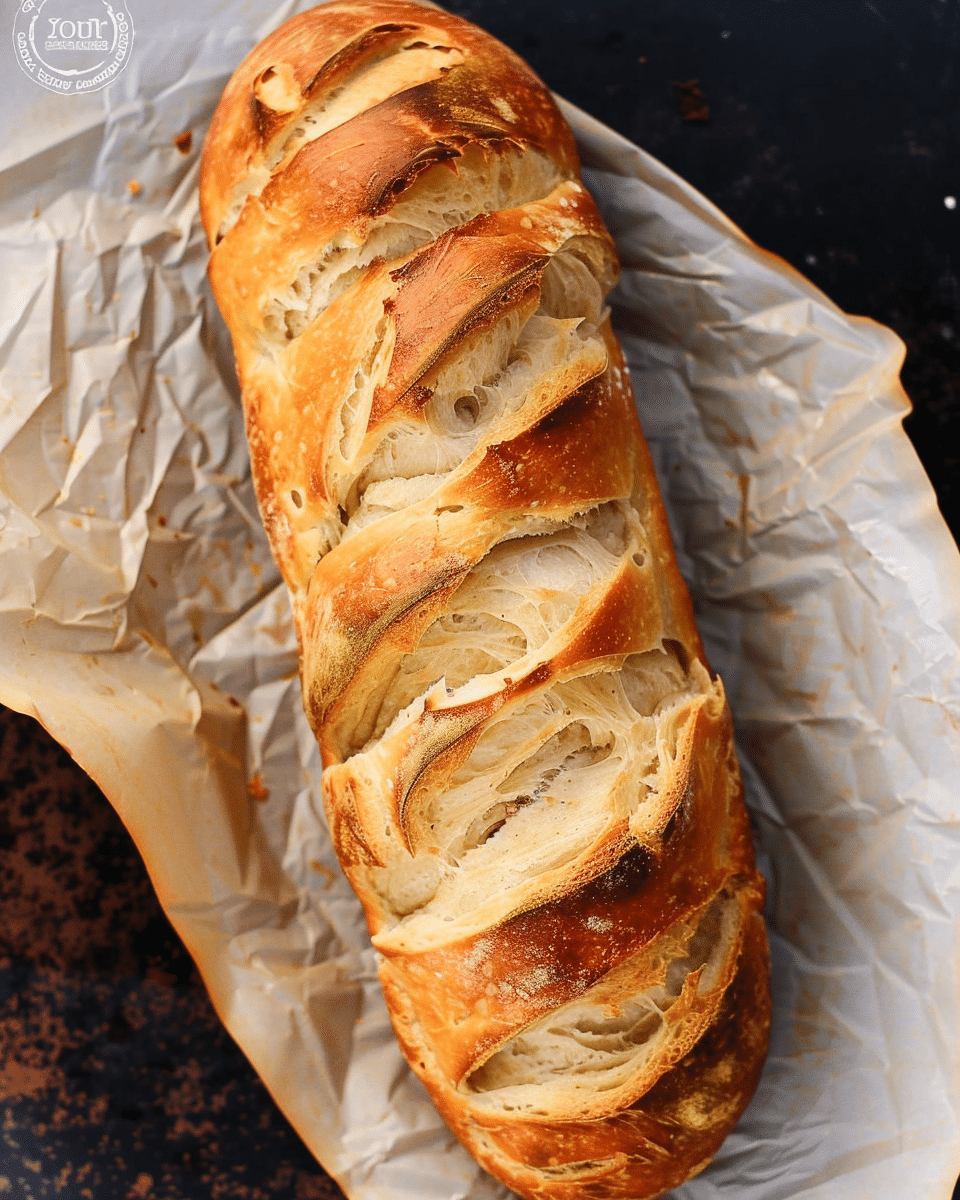
Warm, freshly baked Italian bread straight from the oven brings that comforting, nostalgic feel of home-cooked goodness. I love how the crust turns crisp while the inside stays soft and inviting.
Why You’ll Love This Recipe
I enjoy this recipe because it’s simple, reliable, and gives me two beautifully golden loaves with minimal effort. I like that I don’t have to knead the dough intensely, yet I still end up with bread that’s perfect for serving with pasta, soups, sandwiches, or dipping in olive oil. The dough is easy to shape, the crust bakes up wonderfully crisp, and the inside remains soft and tender – exactly the kind of bread I love pulling from the oven.
Ingredients
(Tip: You’ll find the full list of Ingredients and measurements in the recipe card below.)
1 1/2 tablespoons active dry yeast (or 2 packets)
1/2 cup warm water (about 110°F)
1/2 teaspoon granulated sugar
2 cups hot water (about 115–120°F)
3 tablespoons granulated sugar
1 tablespoon salt
1/2 cup vegetable oil (or olive oil)
5–6 cups all-purpose flour
1 egg white (for brushing)
Directions
I start by dissolving the yeast, 1/2 cup warm water, and 1/2 teaspoon sugar in a small bowl. I let it sit until foamy.
In a large bowl, I mix the 2 cups hot water, 3 tablespoons sugar, salt, and oil.
I add 3 cups of flour and mix well.
I stir in the yeast mixture.
Then I add the remaining flour, a little at a time, until the dough is smooth but still slightly sticky.
I cover the bowl with a towel and let the dough rise for about 1 hour, or until doubled.
After rising, I divide the dough into 2 loaves. I roll each piece out, then roll it up jelly-roll style.
I place the loaves on a greased baking sheet and make diagonal slashes on top.
I cover them again and let them rise for about 30 minutes.
I preheat the oven to 400°F.
I brush the tops with beaten egg white and bake for 25–30 minutes until golden brown.
Servings And Timing
Makes: 2 large loaves
Prep and rise time: About 1 hour 45 minutes
Bake time: 25–30 minutes
Total time: About 2 hours 15 minutes
Variations
I sometimes swap vegetable oil for olive oil for a richer flavor.
When I want sandwich rolls, I divide the dough into 6–8 smaller portions and reduce the baking time.
Using bread flour instead of all-purpose flour gives a chewier texture.
I occasionally add garlic powder, dried rosemary, oregano, or thyme to the dough for extra flavor.
Brushing the baked loaves with melted garlic butter adds a delicious finishing touch.
Storage/Reheating
I let the bread cool fully before wrapping it in plastic wrap or storing it in a bread bag.
It keeps at room temperature for 1–2 days. After that, I slice and freeze it in airtight bags.
To reheat, I warm slices or the whole loaf at 350°F for about 10–15 minutes. Wrapping in foil helps keep the bread soft while reheating.
If I want a crisp crust again, I place the loaf under the broiler for 1–2 minutes after reheating.
FAQs
How do I know the yeast is working?
I check that it becomes foamy within 5–10 minutes after mixing with warm water and sugar. If it doesn’t foam, I replace it.
Can I knead the dough even though it says no kneading required?
I can knead it lightly if I prefer, but I avoid adding too much flour so the loaf stays soft.
Can I bake this as one big loaf instead of two?
I can, but one large loaf may need a longer baking time and may not rise as evenly.
Can I let the dough rise overnight?
Yes, I can refrigerate the dough overnight. I let it come to room temperature before baking.
Why is my crust getting too dark?
If the crust browns too quickly, I loosely cover the bread with foil and continue baking until done.
Conclusion
I love how simple yet satisfying this Italian bread is to make. The dough comes together easily, the rising time is straightforward, and the aroma of fresh bread filling my kitchen makes the whole process worthwhile. Whether I serve it with dinner, enjoy it as a snack, or use it for sandwiches, this recipe always gives me a warm, comforting loaf that I’m happy to share — or keep all to myself.